How Does a Diode Work Circuit Diagram A diode is reverse biased when it acts as an insulator and is forward biased when it allows current to flow. A diode has two terminals, the anode and the cathode. Uses for diodes include switches, signal modulators, signal mixers, rectifiers, signal limiters, voltage regulators, oscillators, and signal demodulators.

The maximum power rating P Z of the zener diode is 2W. Using the zener regulator circuit above calculate: a). The maximum current flowing through the zener diode. Diode clipper circuits are also called limiters because they limit or clip-off the positive (or negative) part of an input AC signal. As zener clipper circuits limit or cut-off

Schottky Diode: A Beginner's Guide Circuit Diagram
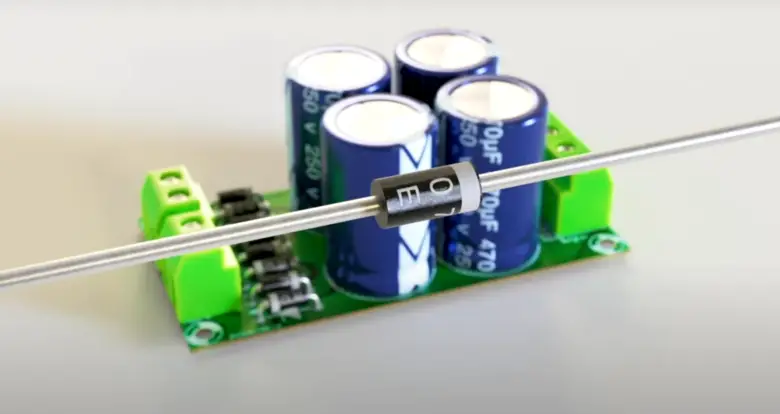
Fortunately, there are pre-built diode bridge modules ready to use that already incorporate the necessary diodes and circuit configuration for efficient AC-to-DC conversion. Here you have some examples of diode bridge modules with different packings: Pre-built modules ensure consistent performance, are compact in size, and simplify integration.

The proper use and connection of a diode are crucial for its right and reliable functionality. Understanding the rating and identifying the polarity is essential for diode proper usage. But the question is how to use a diode properly? It's always recommended to consult the diode's datasheet or seek expert advice when designing circuits
Diode Bridge: Four Diodes That Convert From AC to DC Circuit Diagram
In the devices you use, full-wave rectifiers are what are most commonly used to convert AC voltage to DC voltage. A full-wave rectifier circuit made with diodes is called a diode bridge. Check out the diode bridge in the circuit below: The diode bridge consists of four diodes - D1, D2, D3, and D4 - that are connected together.
